Celebrating Innovation in Psychosocial Risk Management Award 2026
Celebrating the finalists: Innovation in Psychosocial Risk Management
Psychosocial safety is an evolving field and innovation plays a vital role in helping organisations move beyond compliance and into real cultural change.
The Innovation in Psychosocial Risk Management Award celebrates bold ideas grounded in evidence and aligned with the hierarchy of controls. This could be an initiative, program or solution that challenges the status quo and delivers meaningful impact in managing psychosocial hazards.
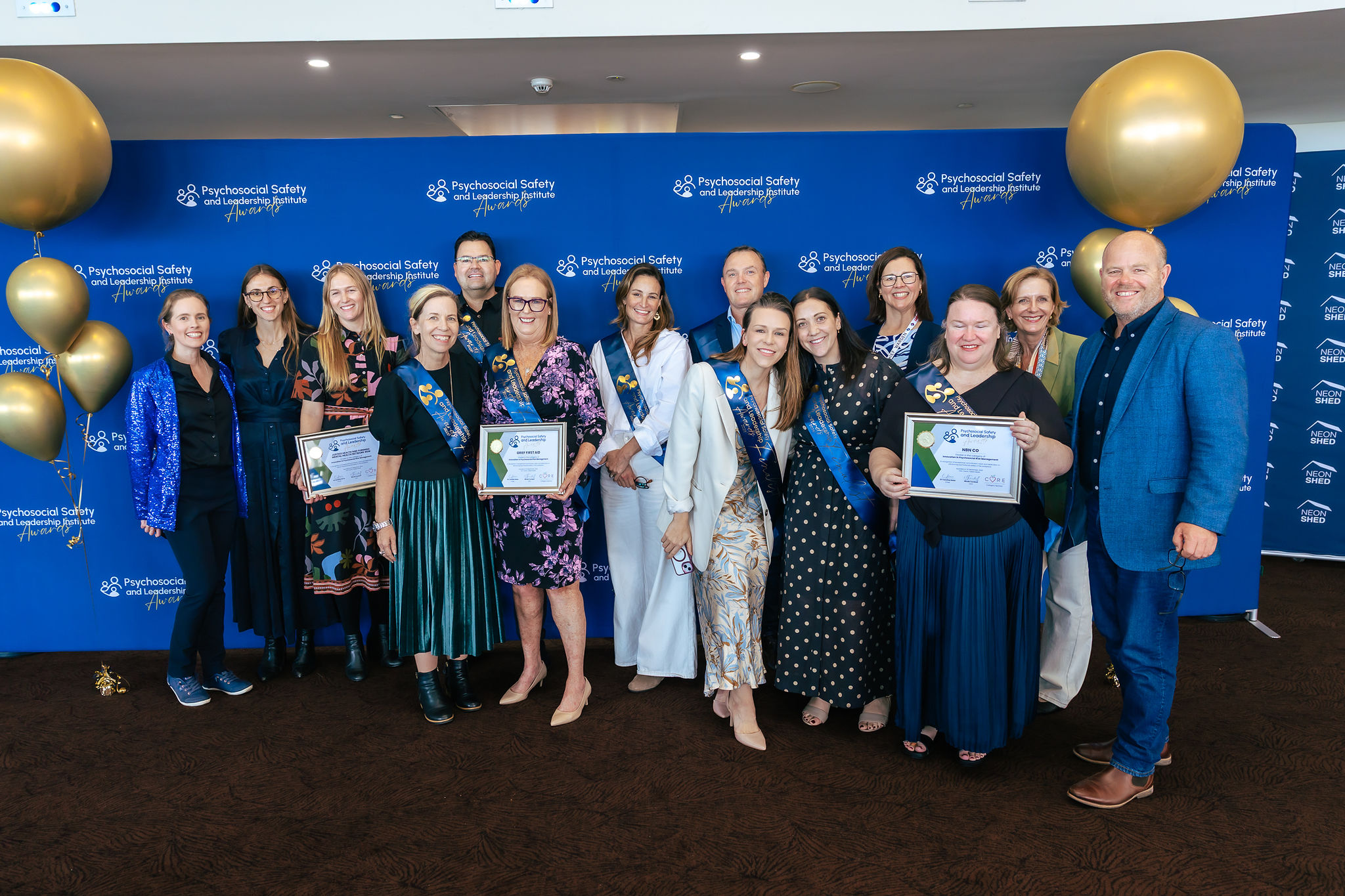
On Thursday 10 September we recognised 11 finalists and 1 winner - find out more about them below.
Meet the Finalists
Asplundh Australia
Daryl developed Bridging the Gap, a system-level consultation approach combining Microsoft Teams with anonymous Mentimeter participation. Designed for a geographically dispersed, high-risk workforce, it allows workers to contribute anonymously and in real time, linking their feedback directly to psychosocial risk identification and the development of controls.
Find out more about their nomination here
CalmSchool™
Safe Principals developed the CalmSchool™ Program to turn psychosocial safety in schools from a general wellbeing conversation into a structured WHS risk management process. The program identifies psychosocial hazards, analyses work-related stress patterns and translates staff experiences into a formal risk register, practical controls and prioritised actions.
Find out more about their nomination here
Grief First Aid
Grief First Aid provides a structured 12-month process, to build capability in workplace relationships and embed Grief First Aid into organisational systems, including leadership practices, communication protocols and return-to-work processes.
Find out more about their nomination here
Justice Health & Forensic Mental Health Network NSW
Justice Health NSW implemented a psychosocial risk management methodology across more than 100 operational sites within high-risk healthcare and custodial environments. The approach combined a psychosocial risk assessment with workforce data, focus groups and co-design to develop organisational solutions.
Find out more about their nomination here
The Lift Project
The Lift Project developed Lifting Lives to address the human side of psychosocial safety through an evidence-based and accessible approach. It blends neuroscience, positive psychology, lifestyle medicine and behavioural science to help people understand how stress and emotional load affect wellbeing and performance.
Find out more about their nomination here
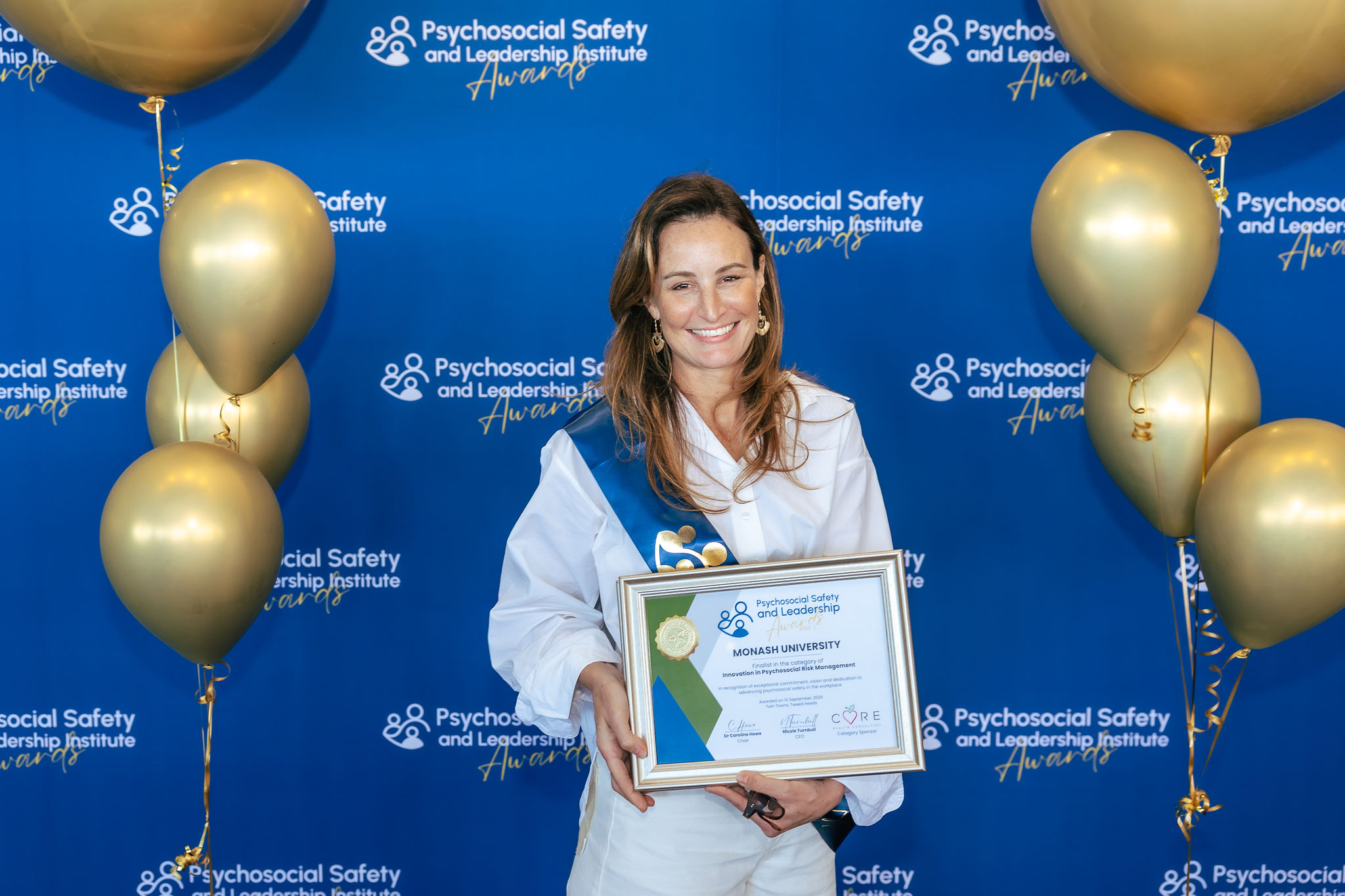
Monash University
Monash University developed the Ways of Working Review as a scalable, evidence-based approach to understanding how work is designed, managed and experienced. It combines the Copenhagen Psychosocial Questionnaire with qualitative consultation to identify patterns, hotspots and priority risks, while helping co-design practical solutions.
Find out more about their nomination here
NBNco
nbn Co developed the Leaders as First Line of Defence program, which was co-designed with Australian Psychological Services. The program combines diagnostics, immersive scenario-based learning and behavioural nudges, with organisational procedures and a live control library. It equips leaders to take ownership of local controls and escalate systemic risks.
Find out more about their nomination here
People Powered
People Powered developed The Sensemaking Approach to move beyond traditional surveys and uncover the emotional, relational and systemic patterns that can drive psychosocial risk. Through facilitated Wisdom Circles and sensing conversations, risks are mapped to recognised psychosocial hazard frameworks, with findings used to identify hazards and co-design practical, fit-for-purpose solutions.
Find out more about their nomination here
Psychgroup collaboration with WorkSafe Vic
Psychgroup developed the Psychologically Healthy Basics workshop in collaboration with WorkSafe Victoria to address the gap experienced by small and medium businesses. The workshop translates complex legislative requirements into clear, accessible guidance and uses free tools to help workers identify hazards, assess risks and map appropriate controls.
Find out more about their nomination here
Psychproof
PsychProof was developed to replace static psychosocial risk registers with a continuous, proactive process. The platform includes an anonymous worker intake channel, structured risk assessments mapped to Safe Work Australia’s 17 psychosocial hazards, and a management flow covering identification, consultation, control design, implementation and effectiveness review.
Find out more about their nomination here
And the Winner is…
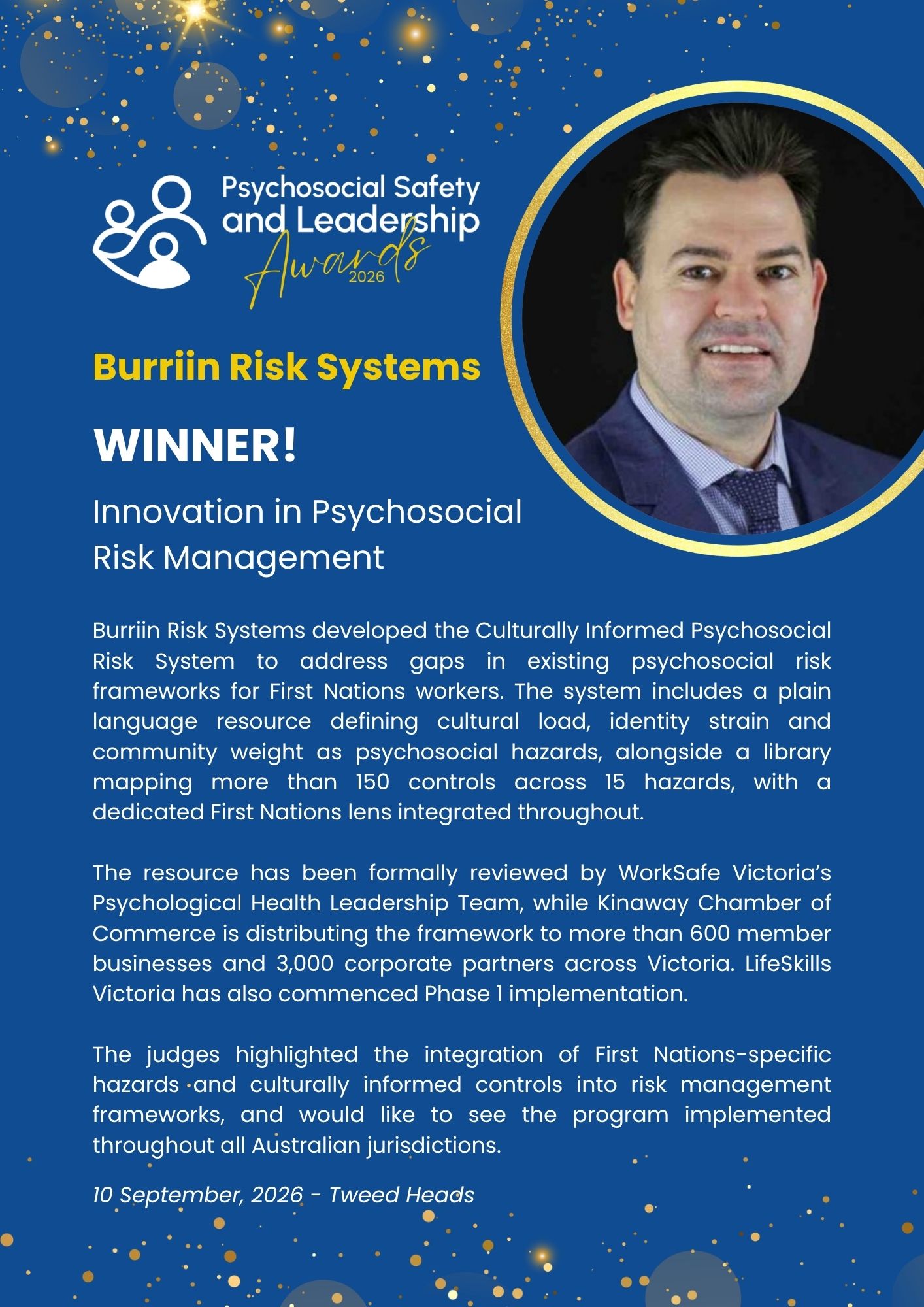
Burriin Risk Systems
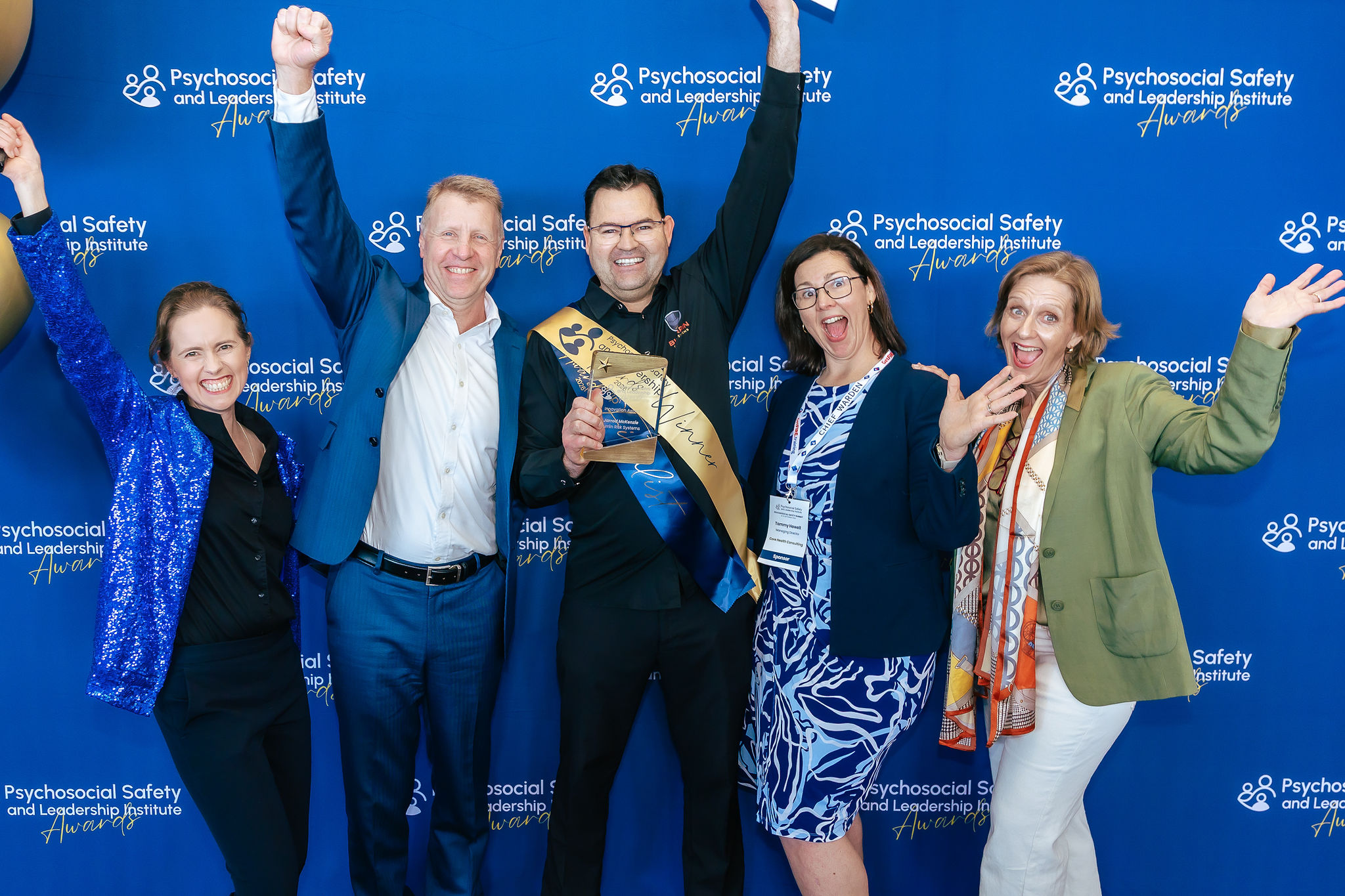
Burriin Risk Systems developed the Culturally Informed Psychosocial Risk System to address gaps in existing psychosocial risk frameworks for First Nations workers. The system includes a plain language resource defining cultural load, identity strain and community weight as psychosocial hazards.
Find out more about their nomination below:
Meet the Judges
The Independent Judging Panel for this category were:
Tony Morris spent years as a workplace safety prosecution lawyer for WorkCover NSW and a Police Prosecutor before building 20+ years of WHS risk advisory experience across government and private sectors. He coaches boards and executives on WHS governance and due diligence, and leads WHS Mock Court proceedings at SafeTM.
Fay Calderone is a Partner at Hall & Wilcox with 25+ years advising boards and senior leaders across Australia on employment law and workplace culture. Her debut book Broken to Safe was an Amazon bestseller, and her second book Rise Up - A Guide to Leading with Inclusion launches with Taylor & Francis Routledge in August 2026.
Tammy Howell is the Managing Director of Core Health Consulting and author of The Real Man's Toolbox. As a Mental Health First Aid Master Instructor and Resilience First Aid Instructor & Coach, she's expanded from physical health education into teaching teams how to have difficult conversations, support each other and rebuild genuine connection in workplaces.
Thank you to Core Health Consulting who sponsored the Innovation category.